Amazon is deepening its push into custom semiconductors as it retools Alexa and its hardware lineup for an era in which artificial intelligence runs directly on devices rather than relying solely on the cloud. Panos Panay, the company’s head of devices and services, said on CNBC’s “The Tech Download” podcast that “end-to-end silicon” is now central to how Amazon designs core products such as the Echo Show 8, Echo Show 11 and select Fire TV models. Those devices already ship with Amazon’s in-house AZ3 family of chips, which are engineered to handle increasingly complex AI workloads locally.
The strategy is closely tied to Alexa+, the upgraded assistant that Amazon has begun rolling out in the US. Panay described Alexa+ as more contextual and proactive, an agent that learns about a user’s life and can carry out tasks based on natural, conversational requests. To support that vision, Amazon has developed two related chips: the AZ3, which improves wake-word detection and audio processing in products like the Echo Dot Max, and the AZ3 Pro, which powers on-device language and vision AI in devices including the Echo Studio, Echo Show 8 and Echo Show 11. Both chips integrate a dedicated AI accelerator designed to run models on the device itself, reducing latency and enabling faster, more fluid interactions.
Despite that focus on local processing, Amazon’s on-device AI still has clear limits. Panay confirmed that the generative AI capabilities underpinning Alexa+ — the open-ended, more elaborate conversational queries that differentiate the new assistant — continue to run in the cloud. The privacy benefits and reduced data transfer associated with on-device inference therefore apply mainly to specific tasks such as wake-word detection, audio processing and certain language and vision workloads. The split between what runs on the device and what remains in Amazon’s data centers, he indicated, is driven primarily by the computational demands and physics of current silicon rather than by company policy.
Amazon’s chip ambitions extend beyond living-room hardware. The company has moved into wearables through the acquisition of Bee, a startup whose $49.99 wristband marked what Panay called Amazon’s first step toward “on-the-go” devices. He said there is a “whole roadmap of on-the-go devices” in development, all designed to stay contextually connected to a user’s home and workplace and tied together by Alexa. Panay suggested that as AI models improve, consumers may gradually move away from interacting through apps and screens and instead rely more on voice and conversational interfaces, with an expanding array of Amazon-built devices — powered by homegrown silicon — acting as the primary access points.
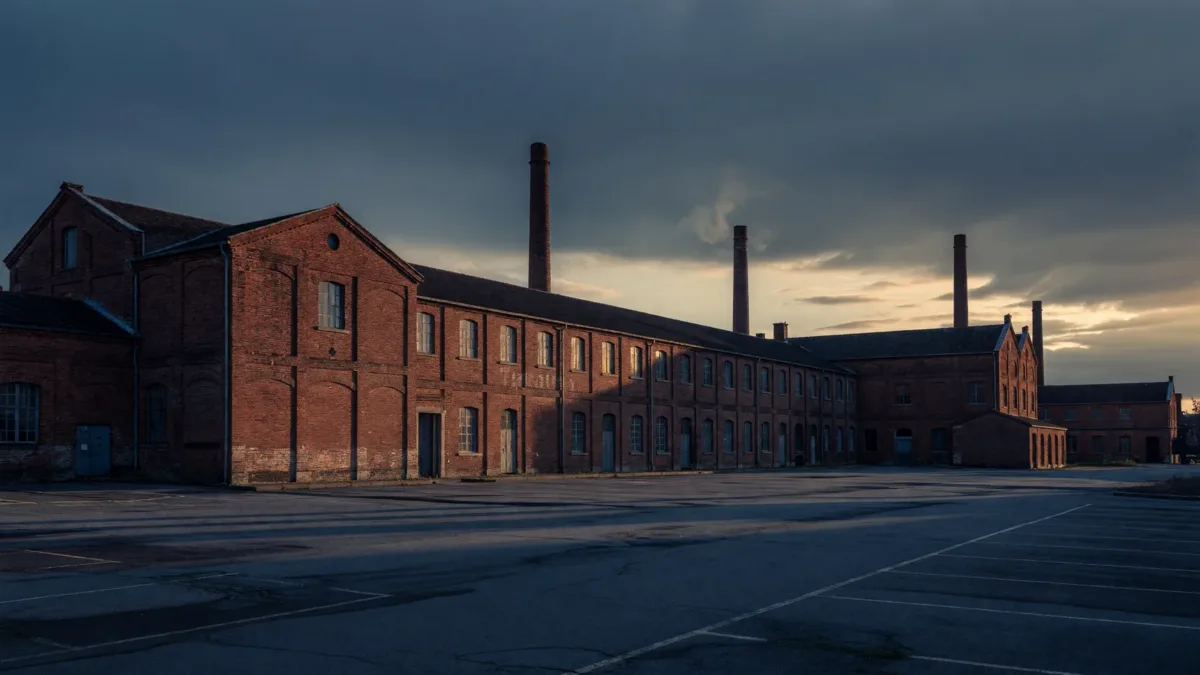
Le compte à rebours est lancé pour Duralex. Placée en redressement judiciaire le 1er juin, la verrerie de La Chapelle-Saint-Mesmin (Loiret) est désormais engagée dans un plan de cession validé par le tribunal de commerce d’Orléans début juillet. Les candidats à la reprise ont jusqu’au 6 août pour déposer un dossier complet, avant une audience clé fixée au 17 septembre qui doit examiner les offres et tracer les lignes du futur de l’entreprise et de ses 243 salariés.
Fondée en 1945 et connue pour ses verres de cantine réputés incassables, Duralex affronte son cinquième redressement judiciaire en un peu plus de vingt ans. Deux ans après avoir été reprise en Scop par ses propres salariés, l’usine n’a pas réussi à surmonter ses difficultés financières. Le tribunal a accordé une période d’observation de six mois avec poursuite d’activité, mais le sort du site et de son savoir-faire industriel dépend désormais de l’issue du plan de cession.
Selon le syndicat Force ouvrière, une quarantaine de marques d’intérêt ont été recensées, sans qu’aucune ne se soit pour l’instant concrétisée en offre formalisée. À l’audience, aucun nom de repreneur potentiel n’a été évoqué. Les syndicats insistent sur la nécessité d’un « projet industriel sérieux » porté par un repreneur « compétent » capable de maintenir l’activité sur le site. Des élus locaux alertent sur le risque de voir émerger des candidats intéressés par la seule marque Duralex, sans engagement sur la production et l’outil industriel.
Dans l’usine, l’activité a été ajustée pour préserver la trésorerie. La production, mise en pause le 12 juin afin de réduire les charges et de concentrer les équipes sur l’emballage et la préparation des commandes, a redémarré avec la relance d’une ligne de fabrication. À l’extérieur, une quarantaine de militants, à l’appel de la CGT, se sont rassemblés devant le tribunal d’Orléans lors de la dernière audience pour afficher leur soutien à la verrerie et rappeler l’enjeu social et industriel de ce nouveau tournant pour Duralex.